No proper
recognition
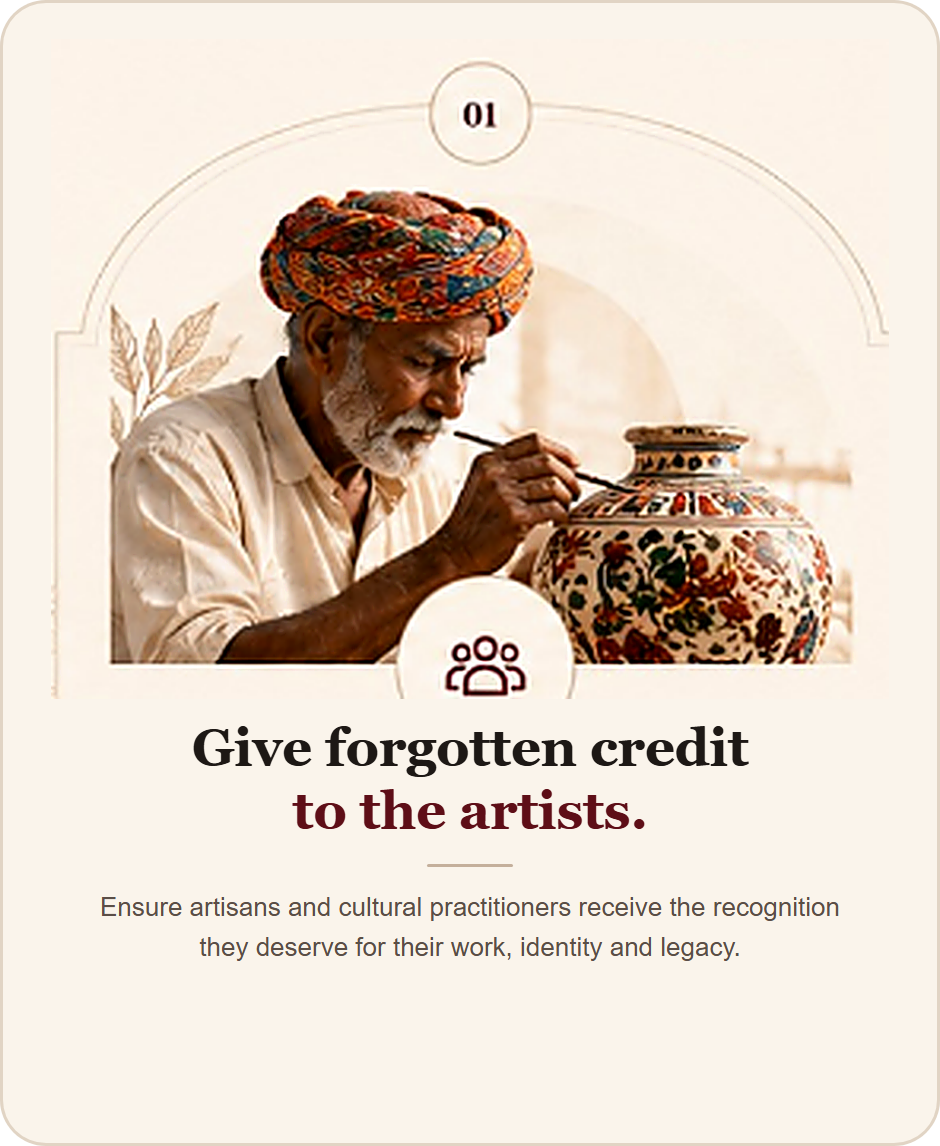
Cultural work can travel without its makers or origins staying visible.
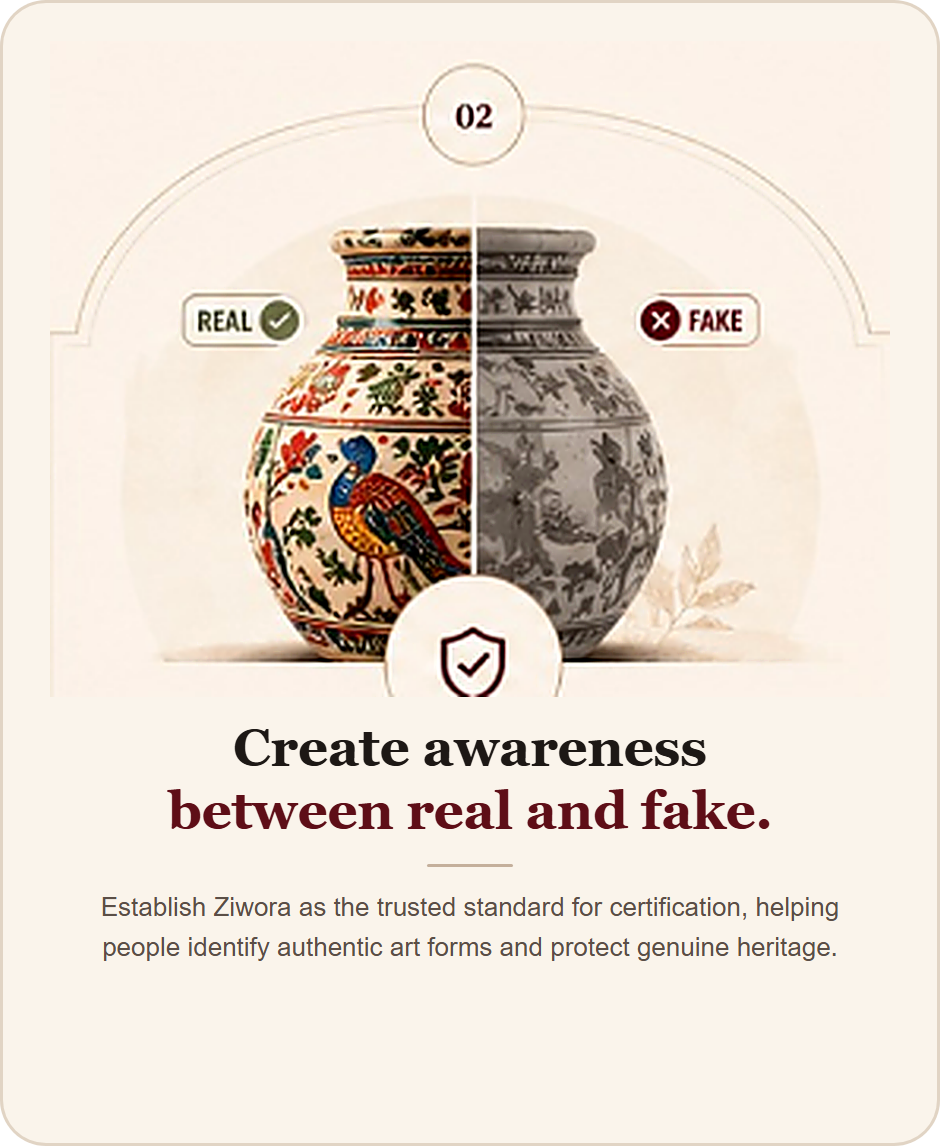
Ziwora verifies the artist, place of origin, materials, technique
and cultural history behind heritage products — and turns
that verification into a publicly accessible digital certificate.
Our team found three key gaps:
recognition, documentation and
accessible context.
Cultural work can travel without its makers or origins staying visible.
Possible misuse is scattered across products, posts and links.
Missing context can reduce cultural and economic recognition.
We verify artists, traditions and products through documented evidence
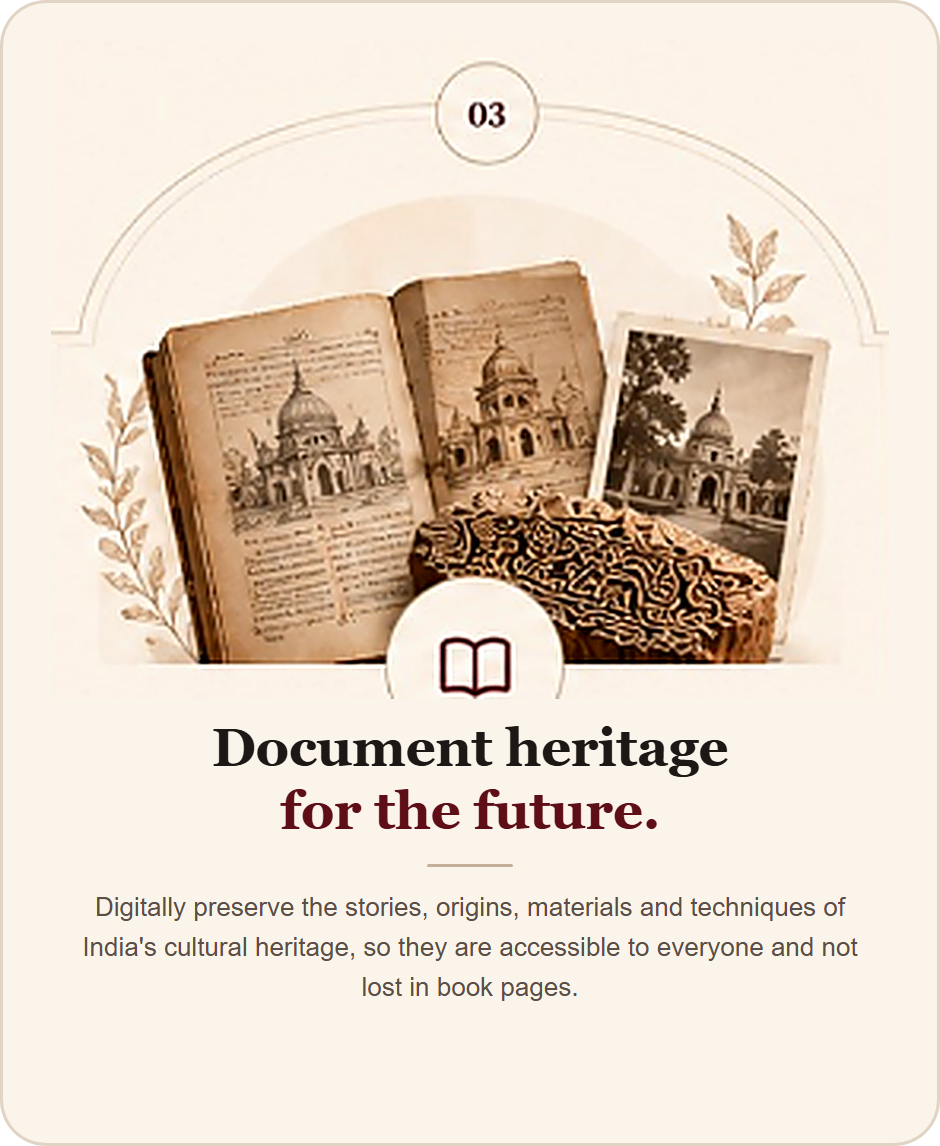
and human validation, turning them into a public digital story.
Explore the tradition.
Understand its context.
Verify before we amplify.
A brand, retailer, museum
or buyer submits a product
or artist for verification.
We review the artist,
origin, materials and
supporting evidence.

Our experts and community
representatives verify
the information.

We issue a verified artist/
product certificate with
a unique ID and QR code.

Anyone can scan the QR code
to explore the authentic story
of the artist and its heritage.

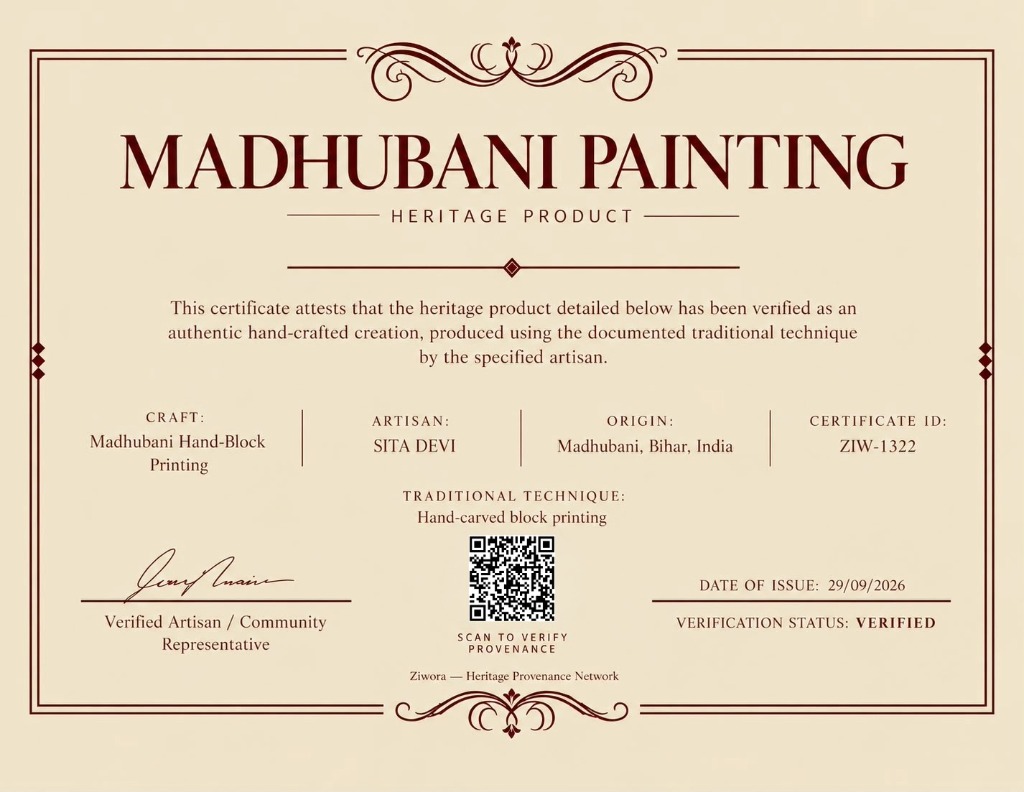
Our certificate brings together key information about the artist, craft and origin, and links it to a unique digital record.
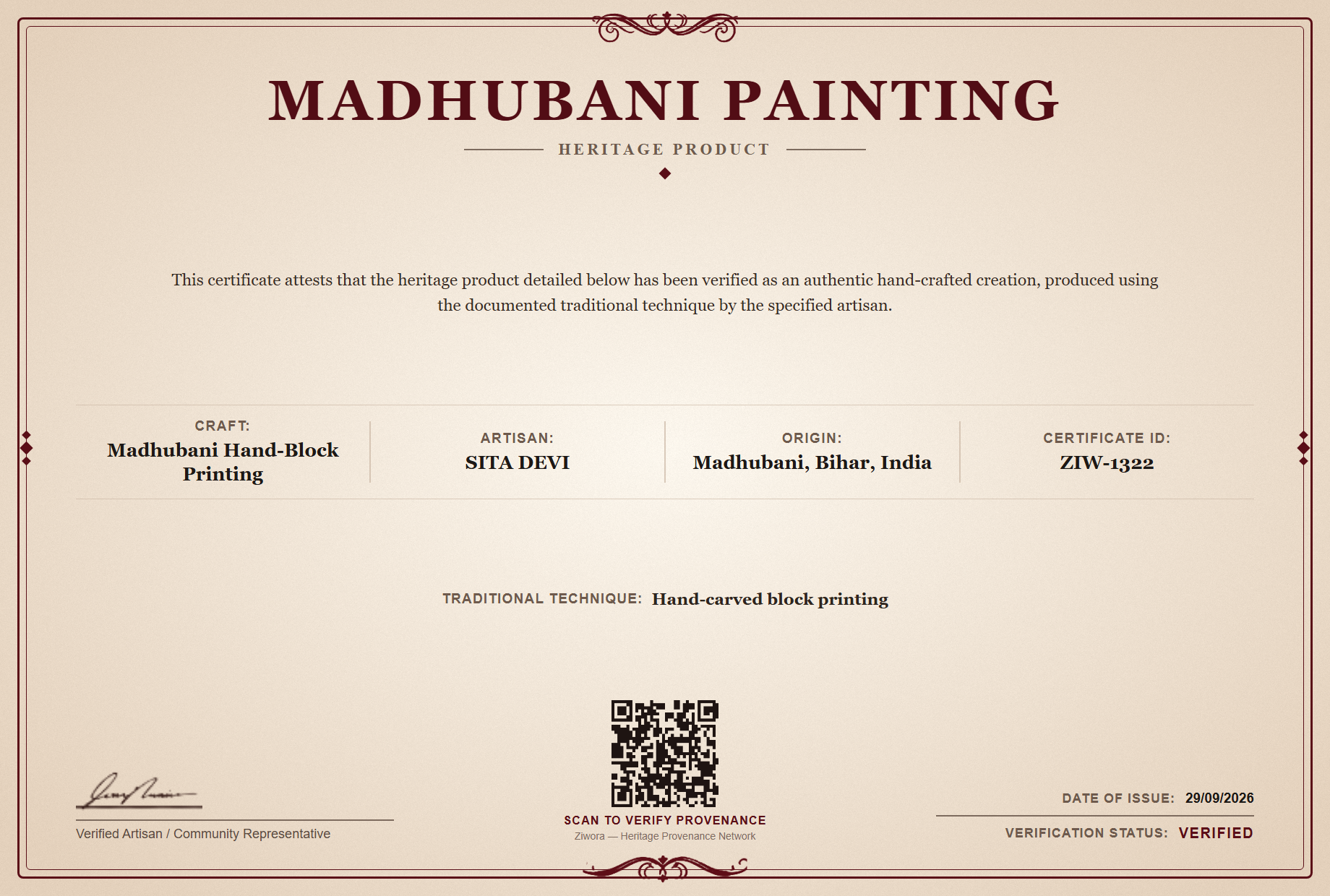
Specifies the type of craft and technique used, helping identify the authentic art form.
Displays the name of the artisan who created the product, ensuring they receive proper recognition for their work.
Shows the region and location where the product was made, connecting it to its cultural and geographical roots.
A unique ID for every certified product, used to maintain a secure and traceable database of verified heritage items.
Confirms the authenticity status of the product and shows the date the certificate was issued.
Each certificate has a unique QR code that leads to the complete digital record — including the product's origin, process, materials, artisan details and verification evidence.
Explore India's diverse crafts — each rooted in a place,
a material and a tradition.
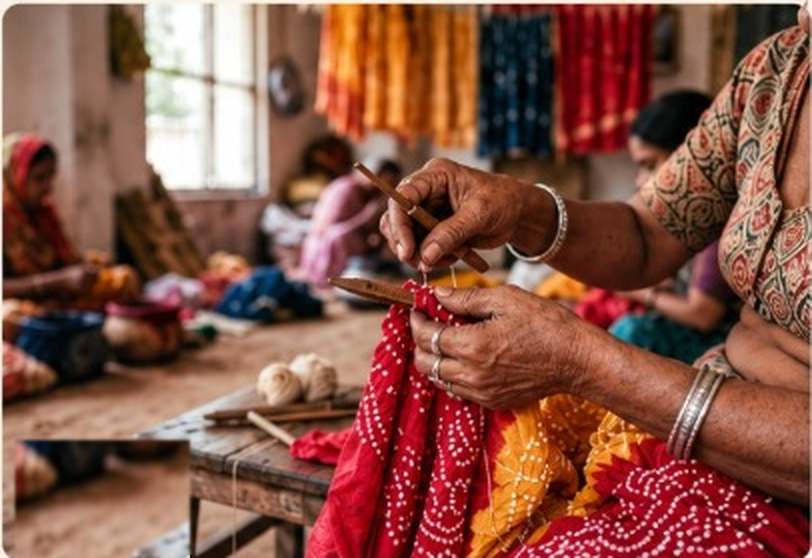
An ancient resist-dyeing technique from Kutch & Jamnagar, creating mesmerizing constellations of microscopic tied dots on gossamer silk.
A few public examples we studied while building our cultural-recognition workflow.
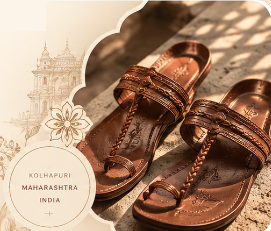
We studied a 2025 design that closely resembled traditional Kolhapuri forms.


Ziwora is just the beginning. Our goal is to create a lasting impact for India's artisans and heritage by building trust, awareness and a documented cultural record for generations to come.
Mithila, Bihar • GI Tag No. 105 & 106
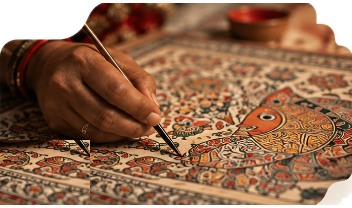
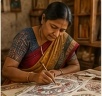
Originating in the Mithila region of Bihar, Madhubani painting was historically created by women on freshly plastered mud walls during weddings and auspicious festivals.
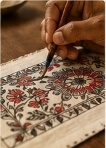
Natural mineral ochres, lampblack soot, turmeric, and indigo applied with bamboo twigs and hand-cut nib pens on handmade cotton-rag paper.
Analysis of 2025 luxury footwear design and traditional Maharashtra leathercraft.
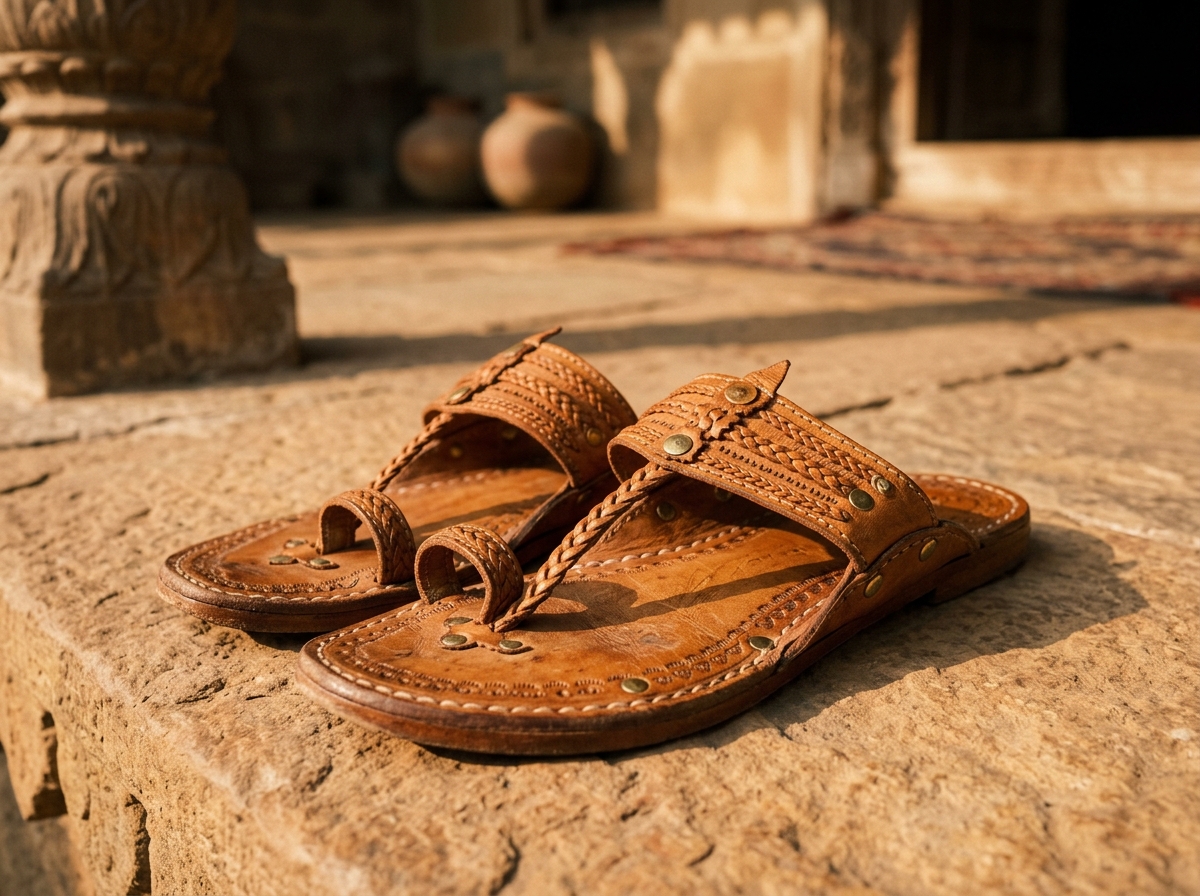
Our computer vision and artisan review revealed matching structural signatures: the signature T-strap strap, braided leather cord (chot), punched floral toe loop (gonda), and vegetable-tanned buffalo leather construction.
When heritage designs are adapted for global runway commercial products without origin attribution or artisan royalty channels, the cultural provenance and economic value are stripped from the source community. Ziwora bridges this through verifiable provenance certificates.
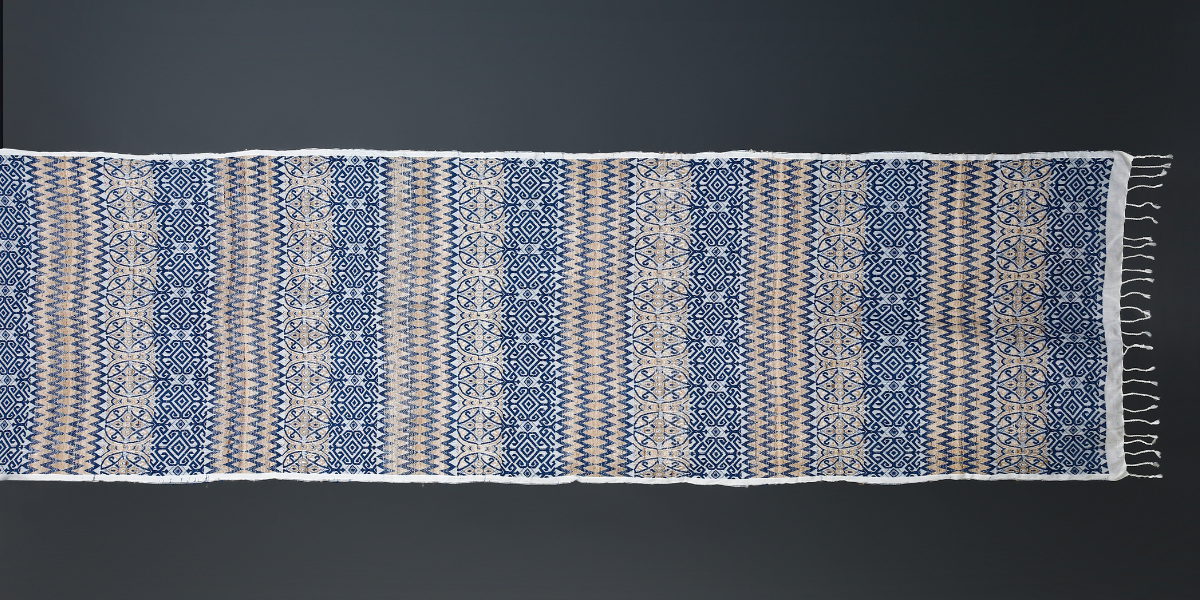 Textiles & Weaving
GI Application Registered
Apa Taani weave, often referred to as Tanii ajü or Tanii Aju, is named after the tribe from the Ziro valley in Arunachal Pradesh practising textile weaving within the settlement.
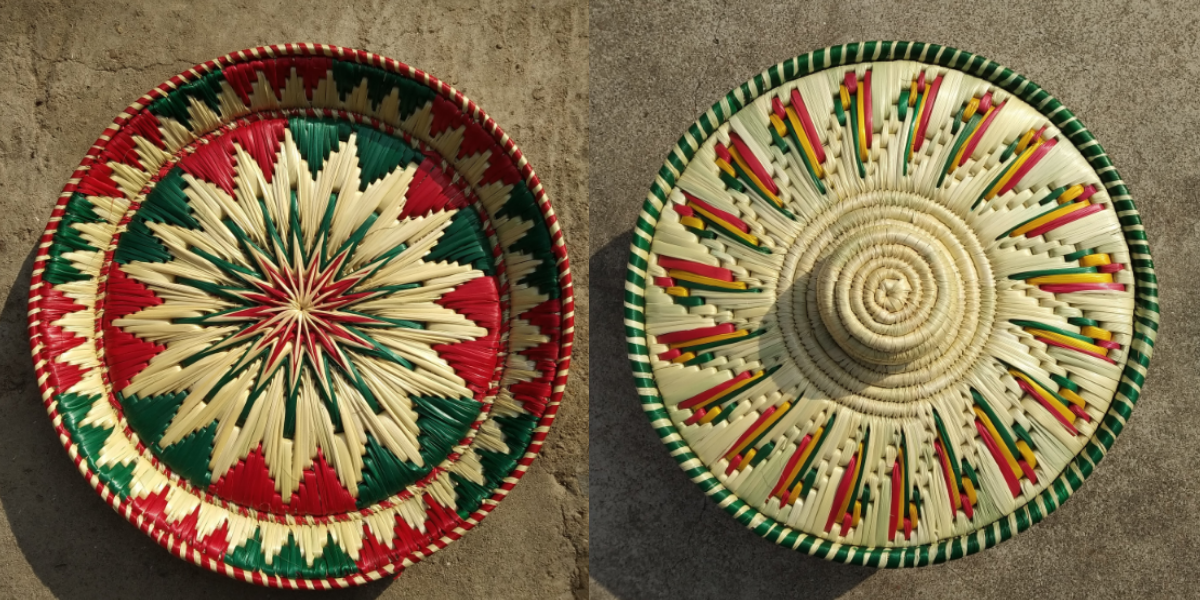 Grass & Natural Fibers
GI Protected (Prayagraj)
The art of making Moonj Baskets have a history that dates back to almost a century in Prayagraj ( Allahabad, Uttar Pradesh). The craft gets its name from the Moonj and Kaasa grass - wild grasses that abundantly grow near the banks of the river Yamuna and Ganga and in and around the vast areas of Prayagraj. These wild grasses are harvested by hand and then skillfully processed to be woven into exquisite baskets.
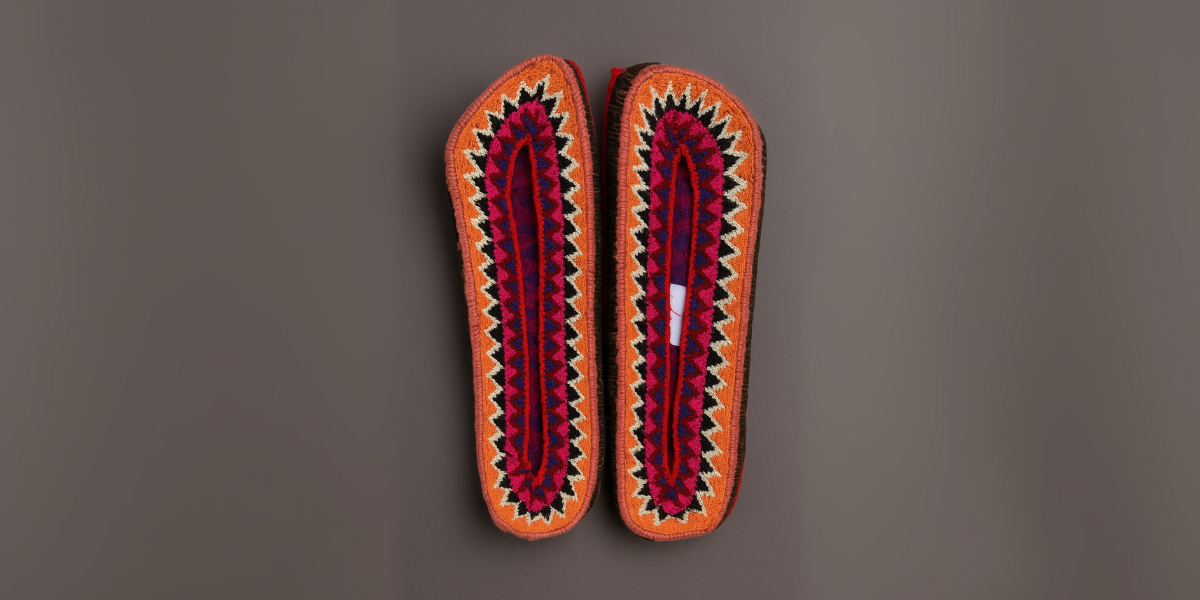 Leather & Footwear
Himachal Heritage Craft
Pula chappal "पुला" is a traditional Indian craft from Himachal Pradesh, where artisans hand-weave durable slippers from hemp and wool to create eco-friendly, warm footwear suited for the Himalayan climate. This craft reflects the region’s resourcefulness and cultural heritage, with each pair made using time-honored techniques passed down through generations.
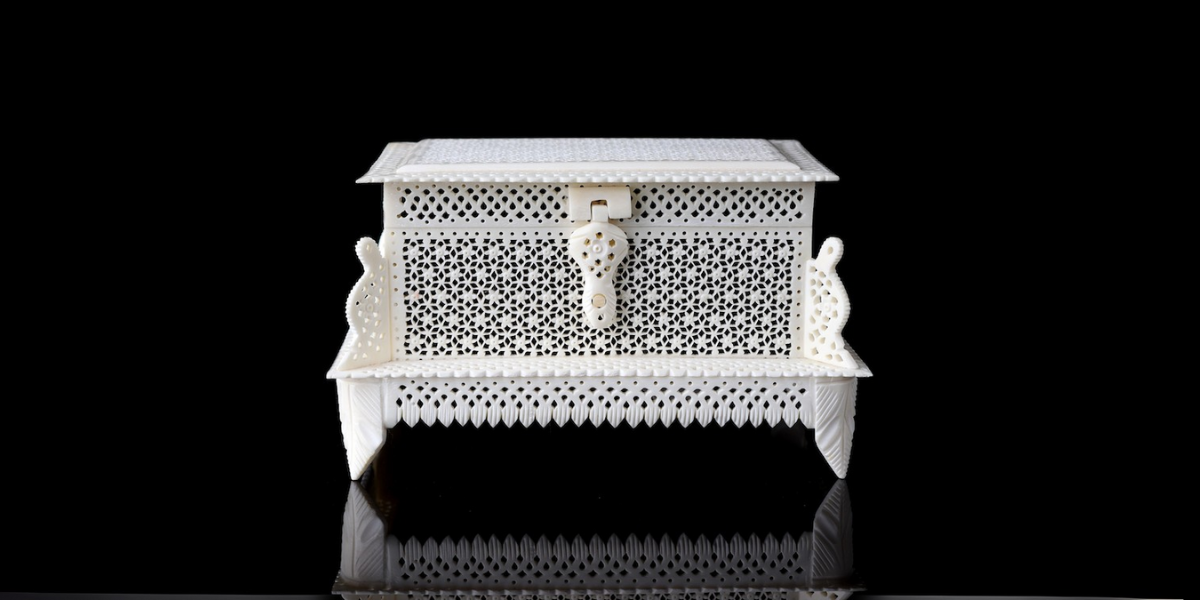 Carving & Sculpture
GI Protected (Lucknow)
Artisans in Uttar Pradesh turn discarded animal bones into detailed ornaments and practical items using time-honored methods. The bone carving "हड्डी की नक्काशी" traditional Indian craft preserves a rich heritage while adapting to modern styles and needs.
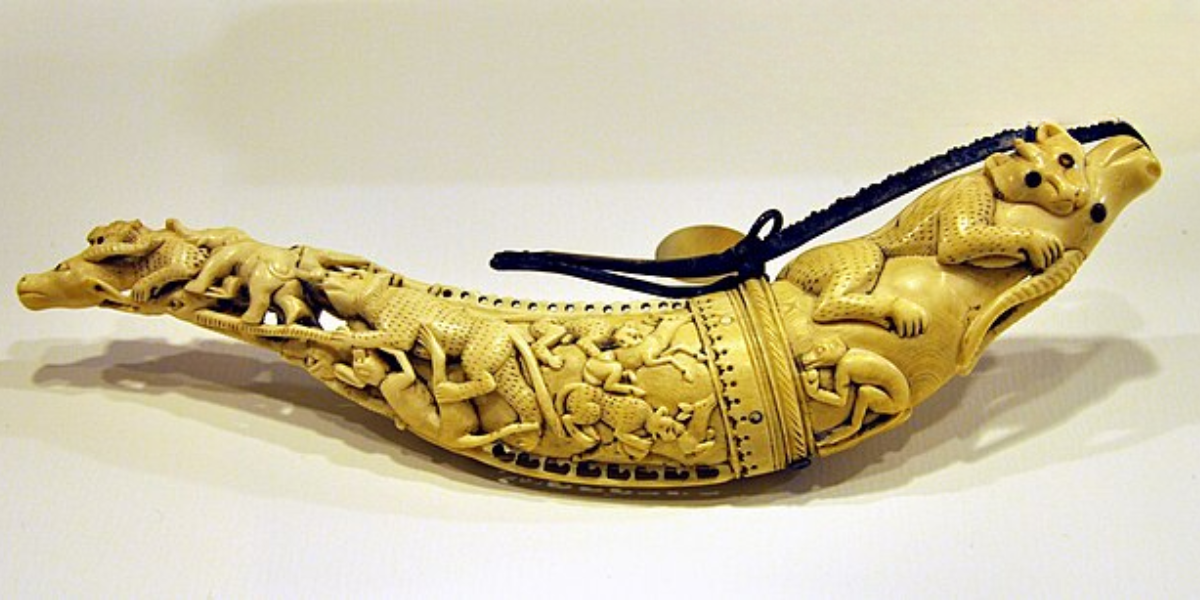 Carving & Sculpture
Kerala State Heritage Seal
Horn carving is a traditional Indian craft where artisans transform animal horns into intricate decorative and utility objects using skilled manual techniques
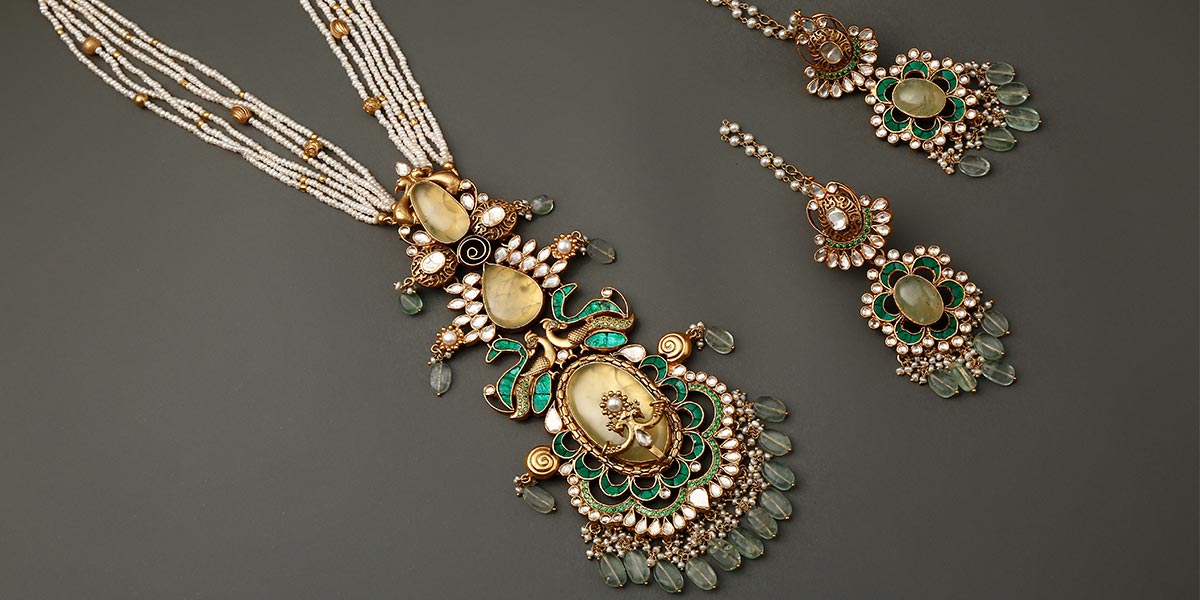 Metal & Jewelry
GI Protected (Jaipur)
The art of embedding precious jewels and metals into the surface of objects is known as Kundan Jadai (gem setting) work.
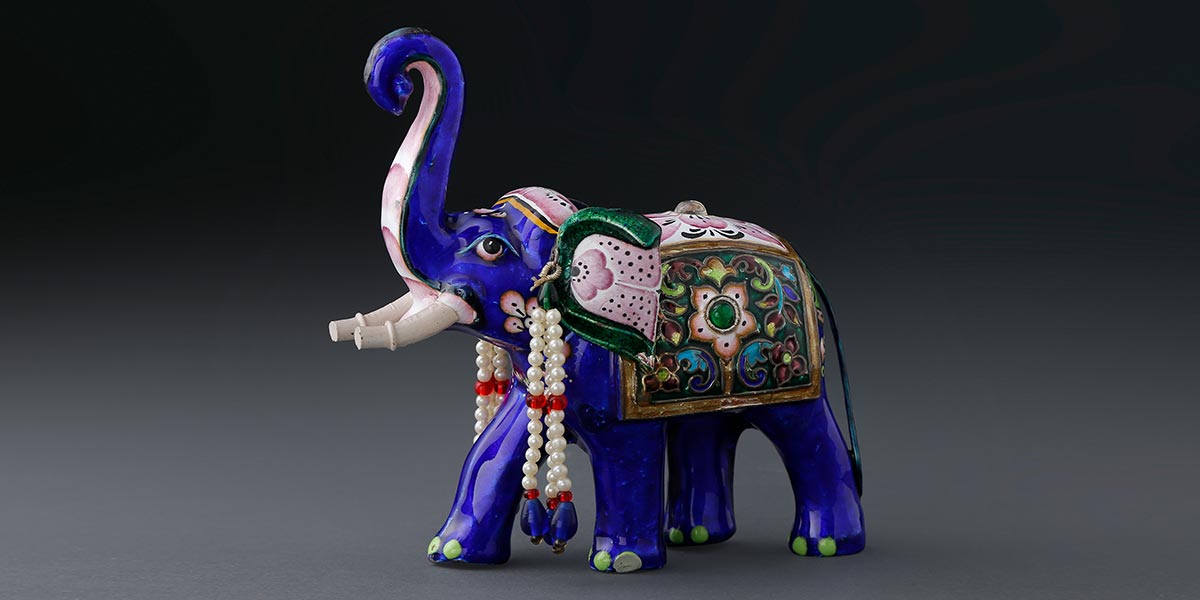 Metal & Jewelry
GI Protected (Jaipur)
The art of Meenakari, or Meena Kari or Mina Kari is an art of painting or embellishing various types of metals with bright colours in dramatic motifs of birds, flowers and leaves.
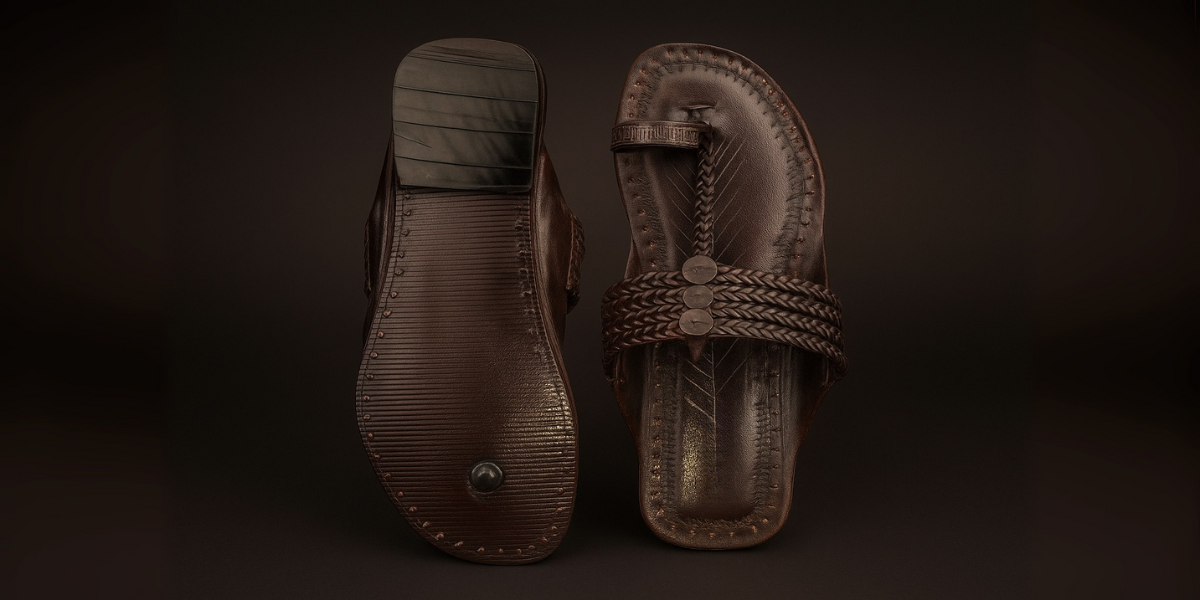 Leather & Footwear
GI Protected (Kolhapur & Karnataka)
Kolhapuri chappal (कोल्हापुरी चप्पल) is a traditional handmade leather sandal from Kolhapur, Maharashtra, crafted by local artisan communities using vegetable-tanned leather and distinctive handwork techniques. Known for their durability and unique designs, these chappals remain an iconic symbol of Indian footwear heritage.
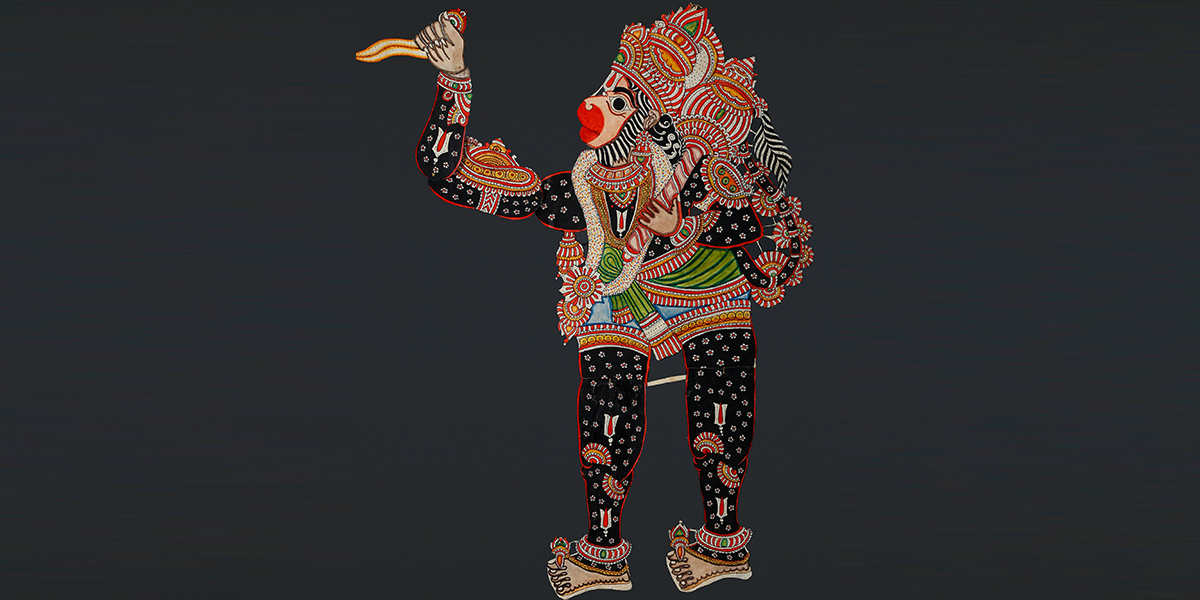 Leather & Footwear
GI Protected (Nimmalakunta, AP)
Andhra Pradesh’s famous leather puppets are large in their make, and made from translucent goat skin.
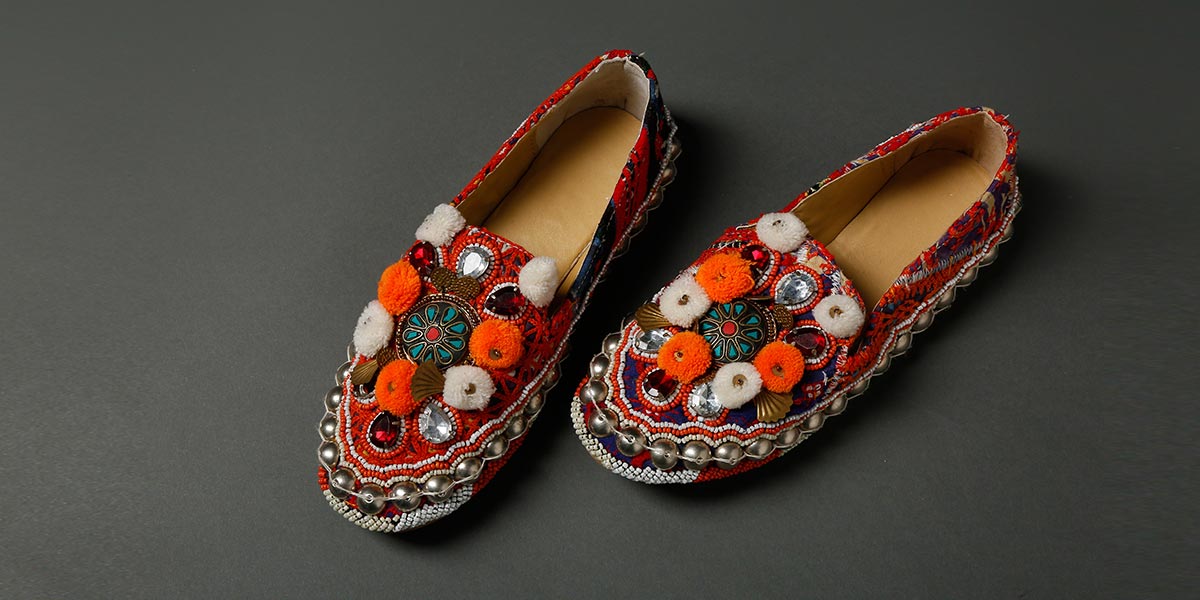 Leather & Footwear
GI Protected (Jodhpur & Jaipur)
Rajasthan has a rich, and long practice of leather crafts. Each rural community had its own families of leather workers.
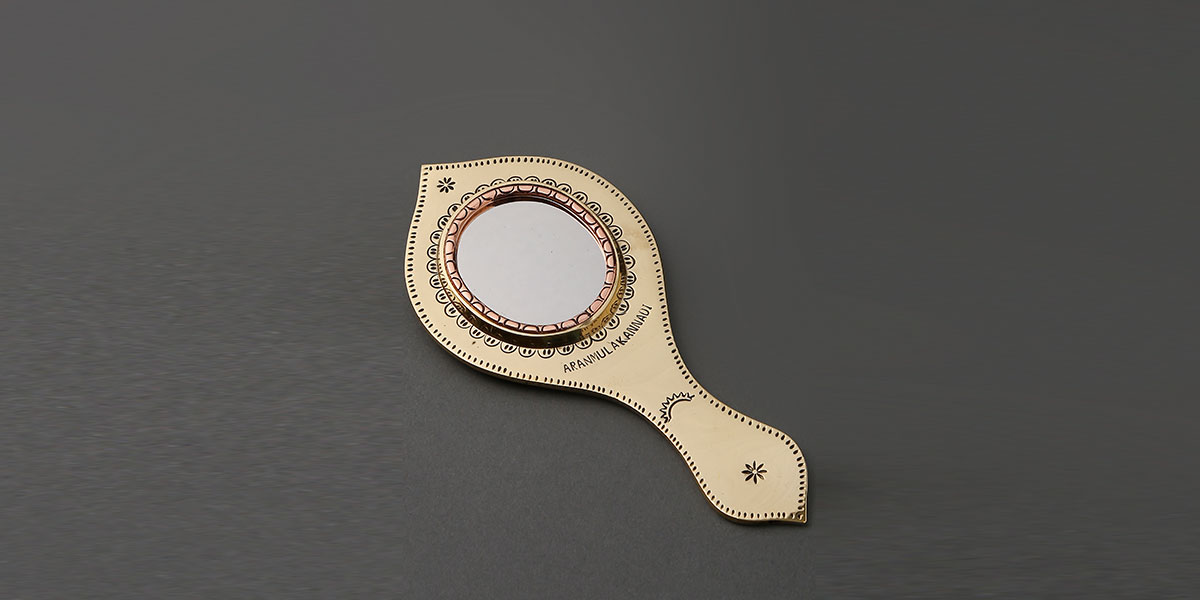 Metal & Jewelry
GI Protected (Aranmula, Kerala)
Aranmula Kannadi (ആറന്മുളക്കണ്ണാടി), a Malayalam term, refers to the Aranmula metal alloy mirror made by hand in Aranmula, a small settlement in the state of Kerala. Unlike the common silvered glass mirrors, this is a metal alloy mirror or front plane reflection mirror, which does away with any secondary reflections or irregularities typical of back surface mirrors.
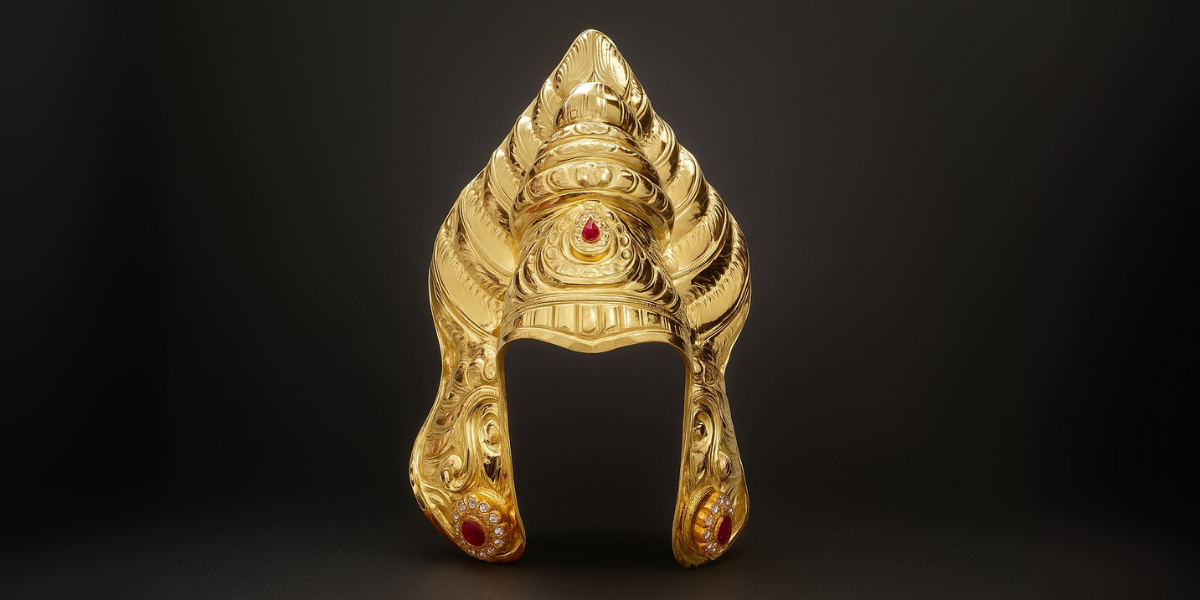 Metal & Jewelry
Tamil Nadu Temple Heritage
Kavasam "கவசம்" is a traditional Indian craft from Tamil Nadu where artisans create embossed sheet metal armour for temple idols and chariots using silver, brass, or copper. Each piece is custom-made and often finished with gold plating for religious ceremonies. Practiced mainly by the Vishwakarma community, kavasam combines technical skill with deep ritual significance.
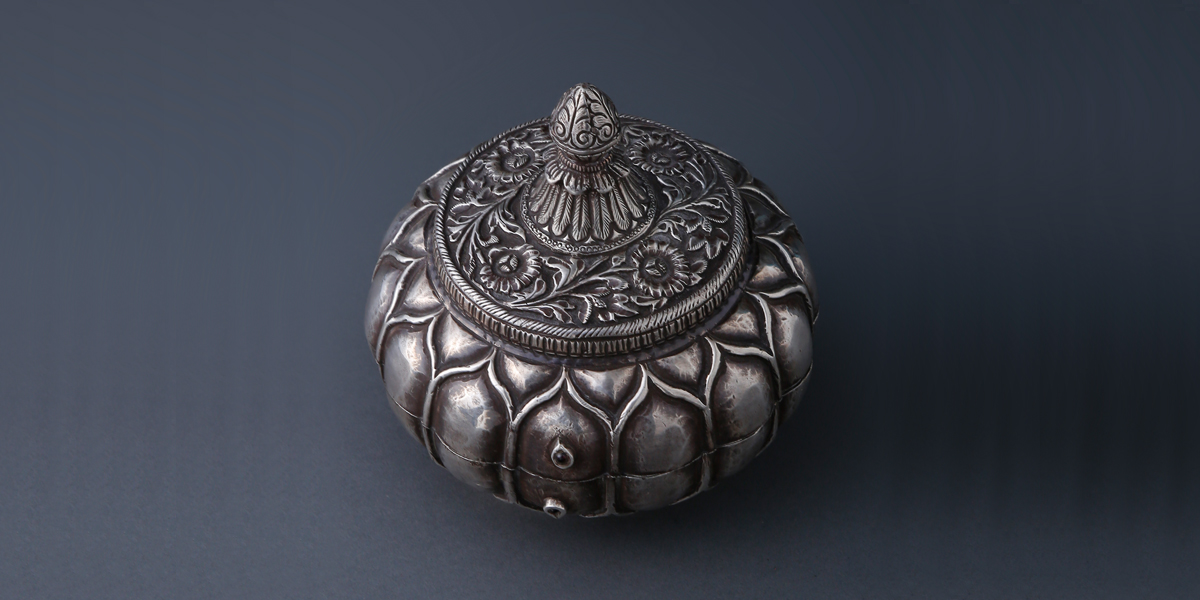 Metal & Jewelry
Maharashtra Heritage Seal (Nashik)
Uthavache Kaam or metal embossing refers to a technique of applying raised motifs and designs to sheet metals like silver, gold, copper, brass and aluminium. Nashik, a district in Maharashtra is known for Uthavache Kaam in Silver metal.
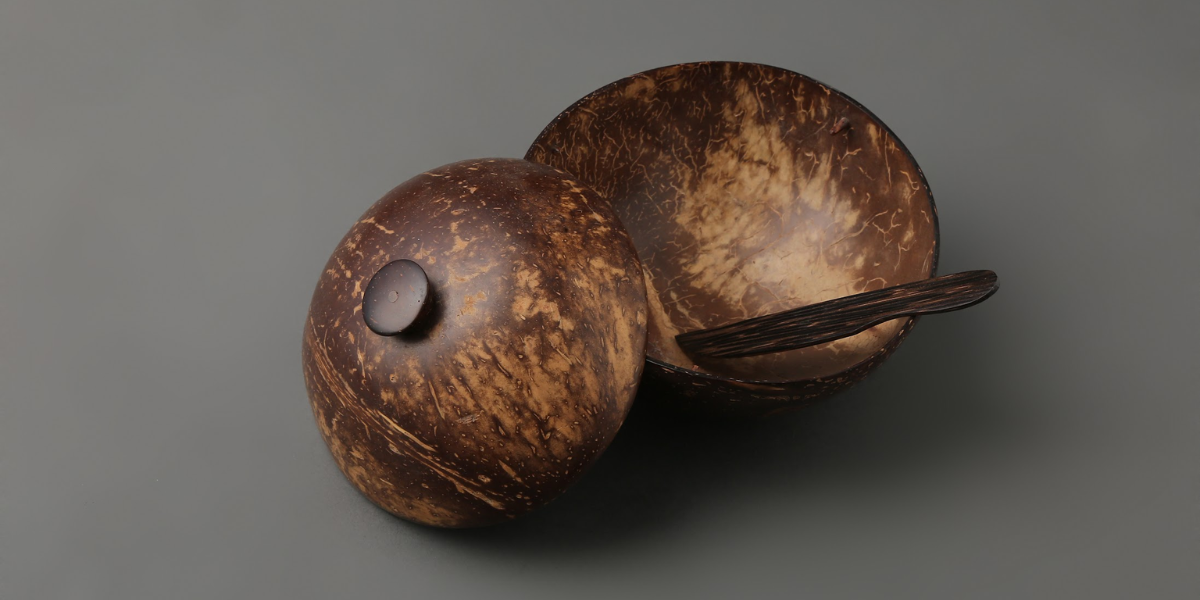 Natural Crafts
Kerala Handicrafts Board Seal
Coconut-based craft "ತೆಂಗಿನಕಾಯಿ ಕರ್ನಾಟಕ (Thenginakayi Kala)" transforms discarded shells into eco-friendly bowls, utensils, and décor, showcasing the ingenuity of Indian coastal artisans. Each piece is hand-crafted for sustainability and style.
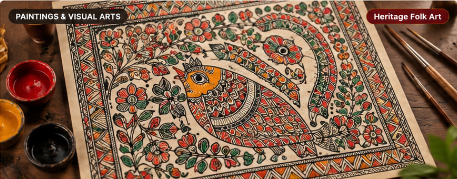
Madhubani painting, also known as Mithila painting, is a traditional Indian folk art from Bihar, characterized by intricate patterns, natural motifs, and vibrant colors. It is created using natural dyes on handmade paper, cloth, or walls, and often depicts scenes from nature, mythology, and everyday life.
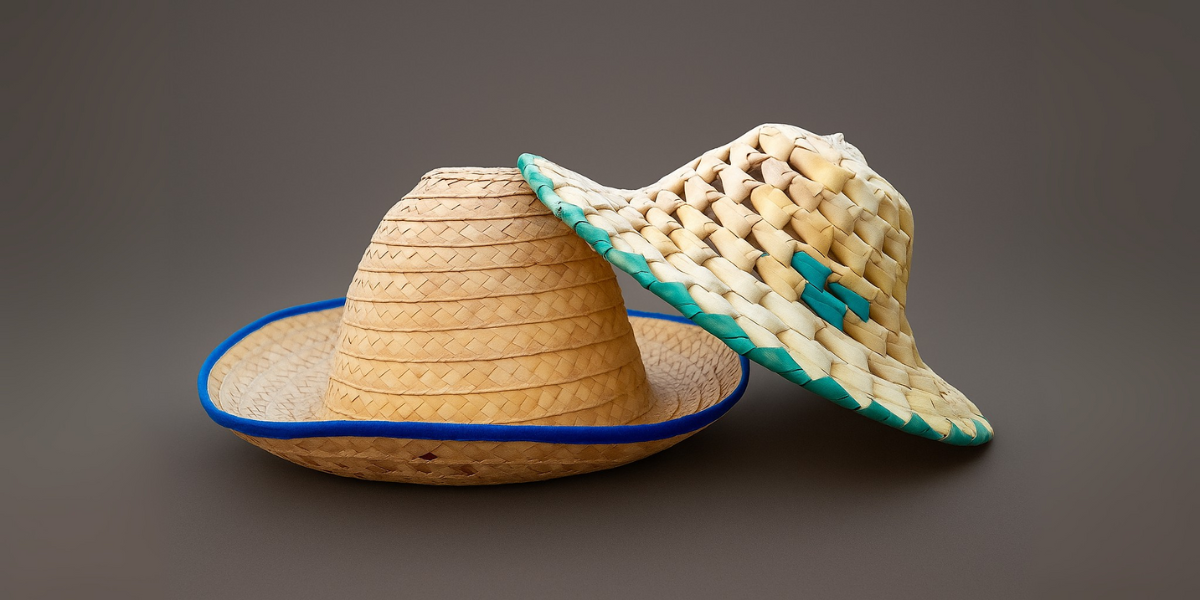 Grass & Natural Fibers
Rural UP Traditional Craft Registry
Date palm craft is a traditional Indian craft where artisans weave baskets, mats, and utility items from dried date palm leaves in regions like Uttar Pradesh and Haryana.
Description text goes here.
A timeless piece of India's living heritage